Resource
How Teachers and Professors Use AI Detection Tools to Evaluate Student Work in 2026
A look at which AI detection tools educators use, how they integrate with LMS platforms, and what the accuracy data actually says about each tool.
June 15, 2026 · Naturalmelo Team
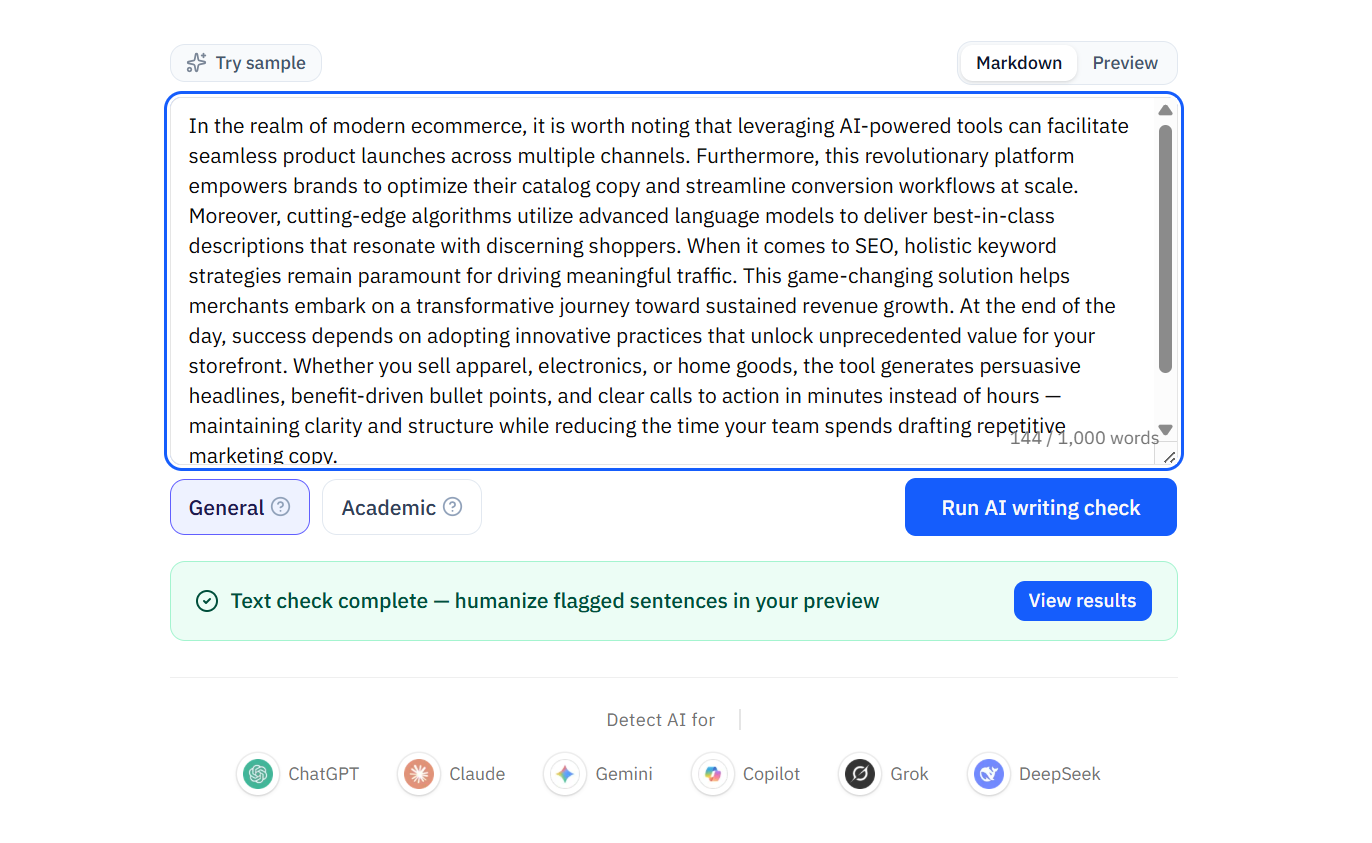
Sentence-level AI detection with pattern-based highlighting
The Tools Teachers Actually Use
The three most widely adopted AI detection platforms in education are Turnitin (68% of institutions), GPTZero (42%), and Copyleaks (31%). Most educators don't choose their detection tool — they use whatever their institution's LMS integrates with. Turnitin dominates because it's bundled with the plagiarism checker institutions already pay for.
But tool adoption doesn't equal tool reliance. A 2025 survey by the MLA found that 74% of instructors treat detector output as one factor among many, not as definitive proof. The trend is toward using detection as a conversation starter — identifying passages for discussion — rather than as an automated judgment.
How Teachers Incorporate AI Detection into Their Workflow
The typical instructor workflow looks less like "run detection → punish AI use" and more like "notice something → run detection for context → discuss with student." Teachers are trained to look for voice inconsistency, quality shifts, fake citations, and process evidence before checking a detector score. The detector confirms or challenges suspicion — it rarely creates it.
Most institutions now require multiple forms of evidence before pursuing an academic integrity case. A detector score alone is insufficient at 89% of US colleges and universities, according to a 2025 survey. The most common standard: detector score + writing process evidence + student interview.
LMS Integration: How Detection Reaches the Classroom
Turnitin integrates directly with Canvas, Blackboard, Moodle, and Brightspace. When a student submits a paper, the AI detection report is generated automatically and appears alongside the similarity score — but only instructors see it. GPTZero offers an Education tier with LMS integration and batch submission. Copyleaks provides API access for custom LMS integration.
The student experience is largely invisible: you submit your work, and somewhere in the background, algorithms analyze it. You don't see the results unless your instructor chooses to share them. This opacity is why pre-submission self-checking matters — you should know what an instructor might see before they see it.
What Teachers Look for Beyond Software
Experienced teachers develop an ear for AI-generated writing that operates independently of any tool. They notice when a student's writing suddenly improves in grammar while deteriorating in analysis. They notice citations that don't exist. They notice that an essay could have been written by anyone about anything — no personal voice, no engagement with course material, no intellectual risk.
The most effective detection tool in any teacher's arsenal is knowledge of their students. A writing sample from September compared to a submission in December tells a story no detector can replicate. This is why process evidence — drafts, outlines, version history — is more powerful than any score.
Quick Tips
Know your institution's tools. If your school uses Turnitin, understand that instructors see both the similarity score AND the AI detection report. Self-check with an independent tool before submitting.
Maintain consistent writing quality. Sudden voice or quality shifts are the #1 thing teachers notice. If your writing suddenly sounds different, be prepared to explain why.
Keep your writing process visible. Google Docs version history, outlines, and drafts show authentic development over time. This evidence is stronger than any detector score.
Talk to your instructors about AI. Most instructors appreciate honest conversations about how you use AI. "I used ChatGPT for brainstorming, then wrote the essay myself" builds trust more effectively than silence.
Frequently Asked Questions
Common questions about how teachers use AI detection.
Q: What AI detection tools do most teachers use?
Turnitin is used by 68% of institutions, GPTZero by 42%, and Copyleaks by 31%. Most teachers use whatever their school provides through the LMS — they rarely choose the tool themselves.
Q: Do teachers trust AI detector scores?
Most treat scores as one data point, not definitive proof. 89% of US institutions require additional evidence beyond a detector score for academic integrity actions. The trend is toward using scores as conversation starters, not verdicts.
Q: Can teachers tell if I used AI without software?
Often, yes. Voice inconsistency, citations that don't exist, generic arguments, uniform paragraph structure, and knowledge of your previous work are all signals experienced teachers recognize without any tool.
Q: How can I check my work before my teacher does?
Use an independent AI checker like Naturalmelo. Paste your draft, see which sentences get flagged, revise them, and re-check. This gives you the same visibility your instructor has — before submission.
Self-check your work before your instructor sees it
Use Naturalmelo's free AI checker to catch templated phrasing and AI flags before you submit.
Run AI writing check