
Recursos
Cómo los maestros revisan la escritura con IA: guía del estudiante sobre lo que los profesores realmente buscan
Los maestros usan más que software de detección — detectan escritura de IA por inconsistencias, cambios de voz y reconocimiento de patrones. Esto es lo que los educadores realmente buscan y cómo usar la IA con responsabilidad sin levantar banderas rojas.
Publicado 29 de julio de 2026 · Equipo Naturalmelo
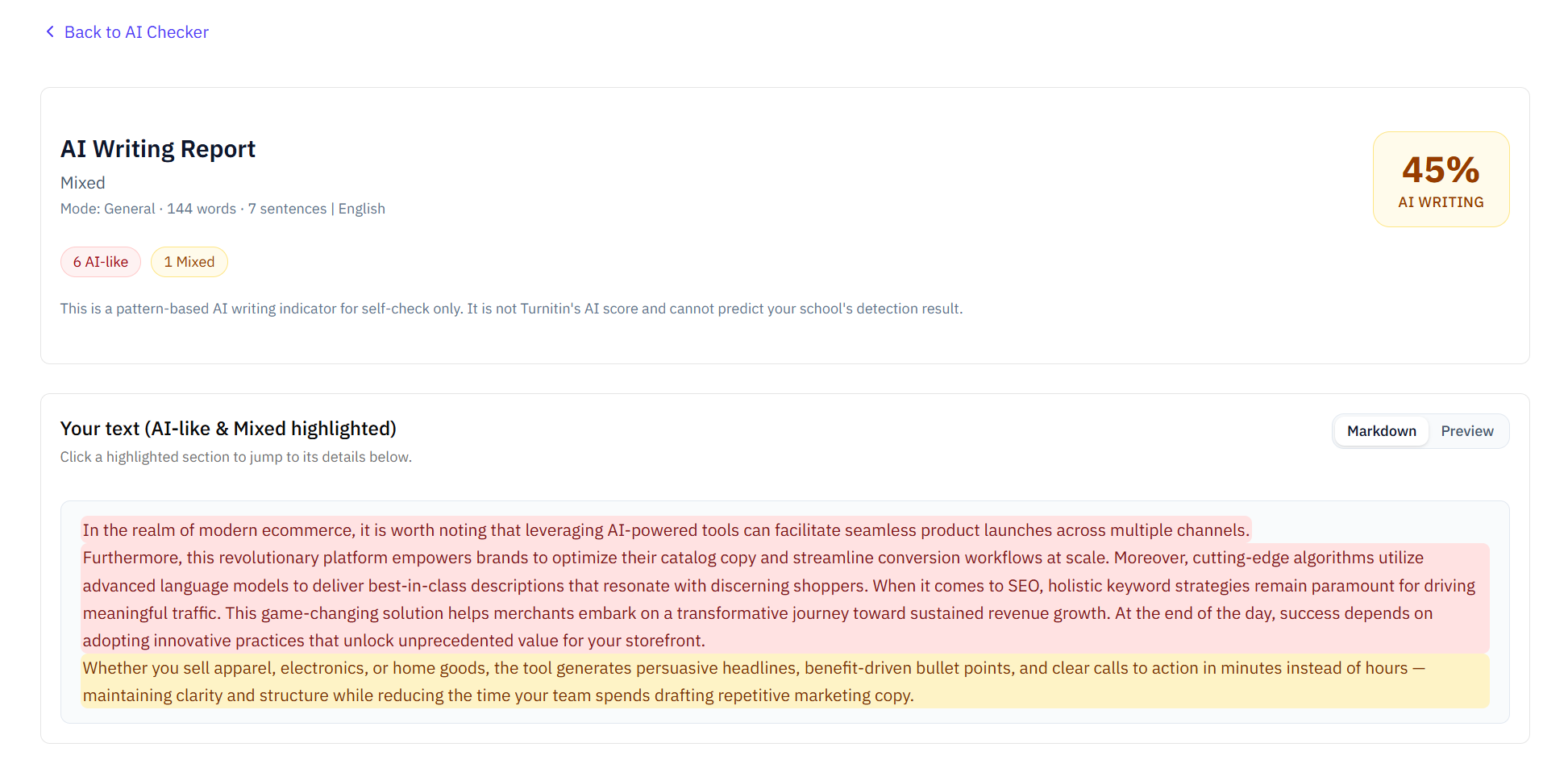
% de Escritura IA a nivel de documento, con conteo de oraciones Similar a humano, Mixto y Similar a IA
Los maestros no solo pasan tu ensayo por Turnitin
Si buscas «cómo revisan los maestros la IA», encontrarás sobre todo guías escritas para maestros — listas de herramientas de detección, recomendaciones de política, consejos sobre cómo tener «la conversación de IA» con los estudiantes. Pero tú no eres maestro. Eres un estudiante que quiere entender a qué te enfrentas. Y lo más importante que debes saber es esto: el software es la herramienta menos importante en el kit de detección de un maestro.
En 2026, el consenso en las instituciones educativas es claro: ningún detector de IA es lo bastante confiable para servir como prueba por sí solo. Una investigación de Stanford HAI encontró que alrededor de dos tercios de las resoluciones contestadas de IA basadas solo en detección automatizada fueron anuladas. (Consulta nuestro análisis a fondo sobre falsos positivos para el panorama completo.) La mayoría de las instituciones ahora trata los resultados del detector como punto de partida para una conversación, no como veredicto. La detección real ocurre por lectura, comparación y conversación — cosas que un estudiante bien preparado puede navegar.
Lo que los maestros están entrenados para detectar
Los maestros desarrollan un instinto para la escritura generada por IA con el tiempo — no por correr software de detección, sino por leer cientos de trabajos estudiantiles y notar cuando algo no cuadra. Esto es lo que buscan:
- Cambios de voz: Tu ensayo de pronto suena distinto a todo lo demás que has entregado. Un escritor de B-menos no produce de golpe prosa impecable de nivel de posgrado sin explicación.
- Desajuste de vocabulario: Usas en el ensayo palabras que no puedes definir cuando te preguntan. Si tu trabajo dice «marco epistemológico» pero no puedes explicar qué significa en conversación, el maestro lo nota.
- Gramática perfecta, análisis superficial: La escritura es gramaticalmente impecable — sin typos, sin construcciones torpes, puntuación perfecta — pero las ideas son delgadas, los ejemplos genéricos y nada se compromete con el material específico del curso.
- Ejemplos genéricos: El ensayo menciona «un estudio» sin nombrarlo, «investigadores» sin citarlos, o usa ejemplos que podrían aplicar a cualquier clase en cualquier escuela — nada específico de tu curso, tus discusiones o tu contexto.
- Citas falsas: La IA es notoria por inventar referencias de tono académico que no existen. Los maestros revisan las citas. Una referencia a una revista que no existe es evidencia más fuerte que cualquier puntuación de detector.
- Estructura uniforme de párrafos: Cada párrafo tiene la misma longitud y la misma estructura. La escritura real de estudiantes es más desordenada — algunos párrafos cortos, algunas ideas se alargan.
Qué herramientas de detección usan realmente los maestros
Los maestros sí usan software de detección — pero normalmente porque su institución lo proporciona, no porque lo buscaran. Las tres plataformas más adoptadas en 2026 son Turnitin (usada por alrededor de dos tercios de las instituciones), GPTZero (poco menos de la mitad) y Copyleaks (alrededor de un tercio). La mayoría de los maestros no elige la herramienta; usa lo que el LMS de su escuela integra.
Estas herramientas funcionan de formas fundamentalmente distintas. El indicador de escritura IA de Turnitin (incluida la detección de bypasser de agosto de 2025 que marca texto humanizado en morado) analiza patrones en toda la entrega. GPTZero puntúa perplejidad y burstiness — qué tan predecibles son tus elecciones de palabras y cuánto varía la estructura de tus oraciones. Copyleaks combina detección de IA y revisión de plagio con resaltado a nivel de oración.
Estas herramientas producen probabilidades, no certezas. Un 65% de IA no significa «el 65% de este ensayo lo escribió la IA». Significa que la herramienta estima un 65% de probabilidad de que el texto contenga patrones generados por IA. Esa diferencia importa — y es por eso que la mayoría de las escuelas no trata las puntuaciones del detector como definitivas.
El proceso típico: de la sospecha a la conversación
Entender el proceso real quita mucha ansiedad. Así se desarrollan la mayoría de las investigaciones sobre IA:
Paso 1: El maestro nota algo. Suele no ser una puntuación del detector — es la sensación de que la escritura no coincide con el estudiante. La voz es distinta. La calidad es inconsistente con trabajos previos. Una cita no se sostiene.
Paso 2: El maestro puede pasar el texto por el detector de su institución. Eso produce un informe — cian para probable texto generado por IA, morado para probable texto generado por IA y luego humanizado. Pero es UN dato, y los maestros están entrenados para no tratarlo como definitivo.
Paso 3: El maestro compara con trabajos previos. Esta es la señal más grande. Si cada ensayo anterior tenía errores gramaticales ocasionales, frases informales y párrafos de longitud irregular — y este está impecable — la discrepancia es difícil de explicar.
Paso 4: El maestro revisa las citas. Las fuentes fabricadas por IA son la forma de evidencia más fuerte en una investigación de IA. Si las referencias no existen, la conversación pasa de «¿usaste IA?» a «¿cómo explicas estas fuentes falsas?»
Paso 5: El maestro pide una conversación. Este es el paso más importante — y donde se resuelven la mayoría de los casos. El objetivo es entender, no procesar. Los maestros quieren saber: ¿puede este estudiante explicar su trabajo? ¿Entiende lo que entregó?
El hilo conductor en cada paso es la evidencia de proceso. Un estudiante que puede mostrar borradores, explicar su argumento, discutir sus fuentes y recorrer su proceso de escritura rara vez enfrenta consecuencias serias — aunque haya usado IA para lluvia de ideas o edición. Los estudiantes que se meten en problemas son los que no pueden.
Evidencia de proceso: tu mejor defensa
Si hay un consejo que importa más que cualquier otro, es este: documenta tu proceso de escritura. Cuando un maestro cuestiona si escribiste algo, la capacidad de mostrar CÓMO lo escribiste es más poderosa que cualquier puntuación de detector, cualquier explicación o cualquier negación.
- Historial de versiones de Google Docs: Ediciones incrementales, eliminaciones, reestructuración y desarrollo gradual en el tiempo son la evidencia más fuerte de escritura auténtica. Un bloque grande de texto pegado a las 2 a.m. sin guardados previos es lo contrario.
- Guarda tus borradores: Conserva esquemas, borradores en bruto y borradores de revisión. La progresión de un esquema desordenado a una versión final pulida muestra desarrollo auténtico. El texto generado por IA aparece ya formado — no se desarrolla, llega.
- Conserva notas de investigación: Guarda las fuentes que consultaste, las citas que consideraste, los datos que referiste. Poder decir «usé este estudio específico porque...» demuestra un compromiso genuino con el material.
- Sé capaz de explicar tus elecciones en voz alta: Si un maestro pregunta «¿por qué estructuraste tu argumento así?» o «¿qué significa este término?» — deberías poder responder. Si no puedes explicar lo que escribiste, eso le dice al maestro más que cualquier detector.
Cómo usar la IA de formas que los maestros respetan
Esta es la realidad en 2026: casi el 90% de los estudiantes reporta usar IA en su trabajo académico, y alrededor de la mitad la usa semanalmente. Los maestros lo saben. La pregunta pasó de «¿estás usando IA?» a «¿estás usando IA de una forma que apoya o reemplaza tu aprendizaje?»
El uso responsable de IA significa que la IA apoya tu pensamiento sin reemplazarlo. ¿Hacer lluvia de ideas con IA y luego escribir el ensayo tú? Eso es responsable — la IA te ayudó a pensar, pero la escritura es tuya. ¿Generar un ensayo completo con IA, pasarlo por un humanizador y entregarlo sin revisión? Eso no es responsable — la IA hizo el pensamiento Y la escritura, y no aprendiste nada.
Los maestros respetan a los estudiantes honestos sobre su proceso. Decir «usé ChatGPT para hacer lluvia de ideas sobre mi tesis y esquema, luego escribí el ensayo yo, luego usé un detector de IA para revisar frases de plantilla accidentales» demuestra autoconciencia y compromiso real. Decir «no usé IA» cuando sí la usaste — y la evidencia sugiere lo contrario — daña la confianza de una forma difícil de reparar.
El principio es simple: la IA debe apoyar TU pensamiento, no reemplazarlo. Lluvia de ideas, esquemas y edición son apoyo. Generar ensayos completos, humanizar la salida y entregar sin compromiso es reemplazo. Uno construye habilidades; el otro las erosiona.
Qué decir si un profesor pregunta sobre tu uso de IA
Si un profesor pregunta sobre tu uso de IA, lo peor que puedes hacer es entrar en pánico y negarlo todo. Lo mejor que puedes hacer es ser específico sobre tu proceso.
Si usaste IA con responsabilidad: «Usé ChatGPT para ayudar a hacer lluvia de ideas sobre mi tesis y organizar mi esquema. Escribí el ensayo yo a partir de ese esquema. Aquí está mi esquema original y mi primer borrador si quieres ver mi proceso.» Esto demuestra autoconciencia y aporta evidencia.
Si no estás seguro de qué preocupa al profesor: «Me gustaría entender qué te preocupa específicamente de mi entrega para abordarlo directamente. ¿Puedes mostrarme qué pasajes parecen fuera de lugar? Con gusto recorro mi argumento y mis fuentes.» Esto es colaborativo, no defensivo.
Si dependiste demasiado de la IA: «Usé más IA de la que debía en esta tarea. Me gustaría entender cuál habría sido el uso apropiado, y si hay oportunidad de revisar o rehacer el trabajo de una forma que refleje mejor mi propia comprensión.» La honestidad sobre la dependencia excesiva, combinada con la disposición a hacer el trabajo bien, produce consistentemente mejores resultados que la negación.
Consejos rápidos
Escribe tus argumentos centrales tú mismo. La IA puede hacer lluvia de ideas sobre temas, pero tu tesis, análisis y conclusiones deben ser tuyos. Eso es lo que los maestros evalúan — y lo que necesitas poder explicar.
Mantén todo en Google Docs. El historial de versiones que muestra ediciones incrementales, eliminaciones y reestructuración en el tiempo es la forma más fuerte de evidencia de proceso que puedes tener.
Haz una auto-revisión antes de entregar. Pasa tu borrador por un detector de IA como Naturalmelo. Si marca oraciones, revísalas antes de que tu instructor vea las mismas marcas.
Sé honesto sobre tu proceso. Si te preguntan, describe específicamente cómo usaste IA (lluvia de ideas, edición, etc.). Una declaración específica genera confianza; una negación total la destruye.
Preguntas frecuentes
Dudas comunes sobre cómo los maestros revisan la escritura con IA.
¿Cómo revisan realmente los maestros la escritura con IA?
Los maestros usan varios métodos: comparar tu trabajo actual con tareas previas (la señal #1 es un cambio repentino de voz o calidad), buscar patrones de escritura IA (párrafos uniformes, ejemplos genéricos, citas falsas, desajuste de vocabulario), revisar tu proceso de escritura (borradores, historial de versiones, notas de investigación) y a veces pasar el texto por herramientas como Turnitin o GPTZero. Pero la herramienta más importante es su conocimiento de TI como escritor — el software es complementario, no definitivo.
¿Qué detector de IA usan la mayoría de los maestros?
Turnitin es el más usado (68% de las instituciones), seguido de GPTZero (42%) y Copyleaks (31%). La mayoría de los maestros usa la herramienta de detección que su institución ofrece a través del LMS — normalmente no eligen la herramienta ellos mismos. La detección de IA de Turnitin ahora incluye detección de bypasser (resaltados morados) que marca específicamente texto modificado por humanizadores o parafraseadores.
¿Los maestros pueden notar si usé IA solo leyendo mi trabajo?
A menudo, sí — y leer es en realidad más confiable que el software para detectar contenido generado por IA. Los maestros experimentados reconocen cambios de voz, vocabulario que no coincide con tu nivel demostrado, argumentos que no se comprometen con el material del curso y el pulido uniforme de la prosa de IA. La lectura atrapa lo que el software pierde: la brecha entre cómo suena el texto y lo que el estudiante realmente sabe.
¿Qué debo hacer si un maestro me acusa de usar IA?
Mantén la calma y sé específico sobre tu proceso. Si usaste IA con responsabilidad, explica exactamente cómo (lluvia de ideas, esquema, edición) y ofrece mostrar borradores e historial de versiones. Si no estás seguro de la preocupación, pregunta qué pasajes específicos parecen problemáticos y ofrece recorrer tu argumento. Si dependiste demasiado de la IA, la honestidad sobre lo ocurrido — combinada con la disposición a rehacer el trabajo bien — produce consistentemente mejores resultados que la negación.
Revisa tu borrador antes que tu maestro
Usa el detector de IA gratuito de Naturalmelo para ver qué oraciones podrían levantar marcas — luego humaniza y vuelve a analizar en el mismo sitio. Sin registro.
Ejecutar análisis de escritura IA