
Recursos
Escritores ESL y detección de IA: por qué los hablantes no nativos quedan marcados con más frecuencia
La investigación muestra que los detectores de IA marcan de forma desproporcionada la escritura de hablantes no nativos de inglés — con tasas de falsos positivos hasta el doble. Aprende por qué ocurre y cómo proteger tu trabajo auténtico de acusaciones falsas de IA.
Publicado 29 de julio de 2026 · Equipo Naturalmelo
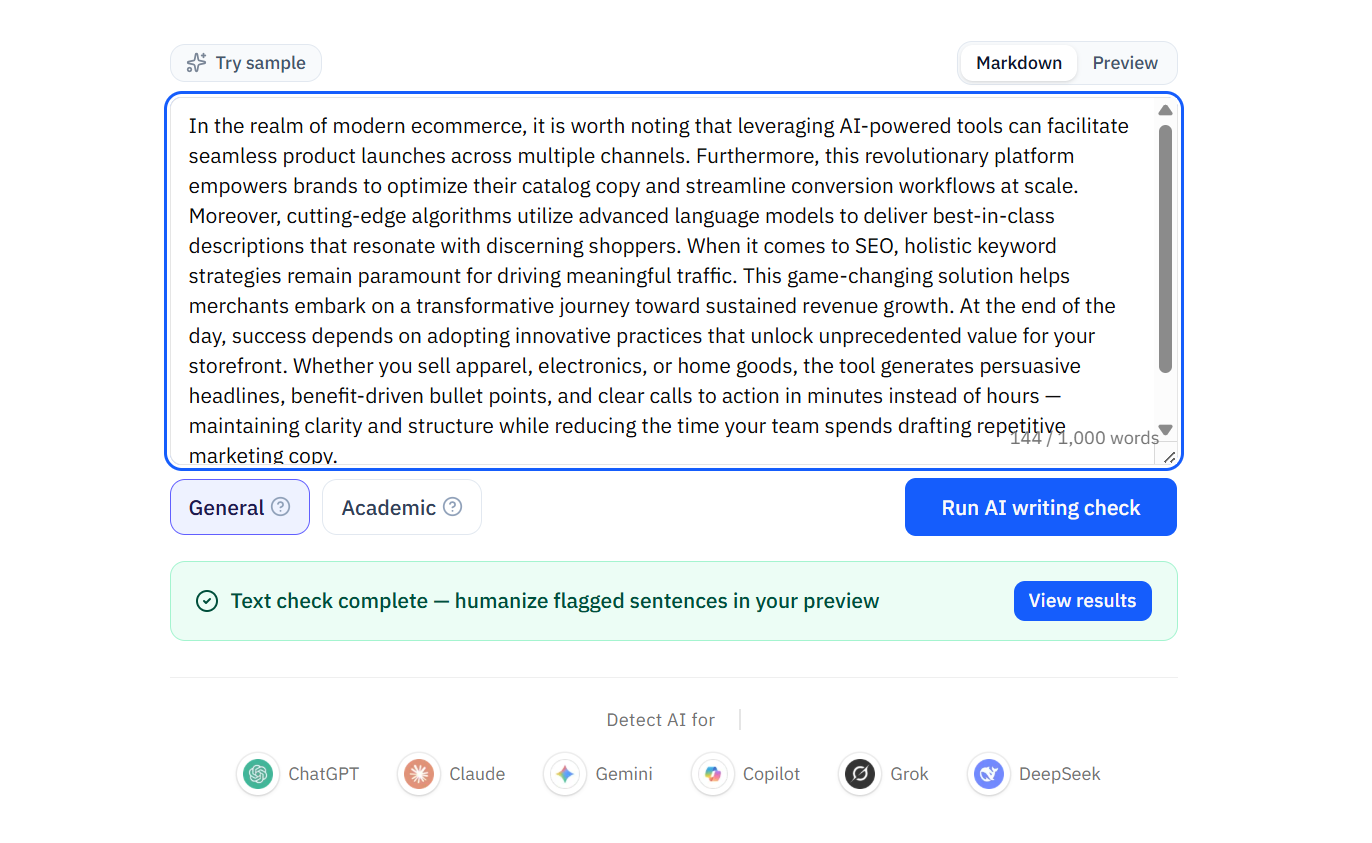
Detección de escritura IA a nivel de oración con resaltado basado en patrones
La disparidad: lo que muestra la investigación
La evidencia es clara: los detectores de IA marcan de forma desproporcionada la escritura de hablantes no nativos de inglés. Un estudio de Stanford HAI ampliamente citado encontró que la escritura ESL se marcaba aproximadamente al doble de la tasa de la escritura de hablantes nativos en siete detectores de IA importantes. Un estudio de seguimiento en 2025 encontró que la disparidad no había mejorado de forma significativa pese a las actualizaciones de modelos — el enfoque estadístico subyacente hace que este sesgo sea difícil de eliminar.
No se trata de que detectores individuales estén mal diseñados. La disparidad está integrada en el enfoque estadístico que comparten todos los detectores importantes. Los detectores miden perplejidad y burstiness — dos métricas que afectan de forma desproporcionada al inglés no nativo. La escritura ESL tiende a tener menor diversidad léxica (menos palabras únicas, más estructuras repetidas) y patrones de oración más uniformes — exactamente las propiedades estadísticas que los detectores asocian con generación por IA.
El resultado es injusto: un estudiante que ha trabajado duro para aprender inglés y escribir en un estilo académico claro y correcto es penalizado por escribir exactamente como su educación le entrenó a escribir. Las características que hacen la escritura «detectable» — previsibilidad, consistencia, registro formal — también son características de una escritura académica competente en inglés como segunda lengua.
Por qué la escritura ESL queda marcada: la explicación técnica
Entender por qué ocurre técnicamente es el primer paso para abordarlo en la práctica. Tres características lingüísticas específicas de la escritura en inglés no nativo se alinean con las señales que buscan los detectores:
Ninguna de estas características es un fallo de la escritura ESL. Son características de una comunicación clara y correcta en segunda lengua. El problema es que los detectores se entrenaron principalmente con patrones de escritura de hablantes nativos e interpretan cualquier desviación — incluso una desviación competente y correcta — como evidencia de generación por IA.
- Menor diversidad léxica: Los escritores ESL tienden a usar un conjunto más pequeño de palabras y a repetirlas con más frecuencia. Un hablante nativo podría describir algo como «surprising, unexpected, startling, or jarring»; un escritor no nativo podría usar «surprising» cada vez. Eso reduce la perplejidad — el detector ve patrones de palabras predecibles y los marca como similares a IA. El estudiante no escribe como una IA; escribe con el vocabulario que tiene.
- Estructuras de oración más consistentes: Los escritores ESL suelen desarrollar un conjunto de patrones de oración confiables y usarlos de forma consistente. Es una buena estrategia de comunicación — asegura claridad — pero reduce el burstiness, la variación que los detectores interpretan como similar a humano. Los hablantes nativos mezclan oraciones largas y cortas, fragmentos y run-ons, de forma instintiva. Los escritores no nativos tienden a estructuras más uniformes — no porque usen IA, sino porque la estructura consistente es un sello de una escritura cuidadosa en segunda lengua.
- Registro formal y menos modismos: La instrucción de inglés académico enfatiza el registro formal y desalienta los coloquialismos. Un estudiante ESL a quien se le enseñó a escribir «Furthermore, the data indicates» en lugar de «Plus, the numbers show» está siguiendo su entrenamiento — pero el registro formal también es lo que los detectores de IA asocian con la salida de LLM. Los modismos, el slang y las construcciones informales son señales humanas fuertes, pero a los escritores no nativos a menudo se les enseña explícitamente a evitarlos.
- Menos contracciones y transiciones coloquiales: «Do not» en lugar de «don't», «However» en lugar de «But», «In addition» en lugar de «Also» — estas elecciones formales son correctas en inglés académico pero reducen la variación natural que distingue la escritura humana de la de IA. Los detectores de IA no saben la diferencia entre «escribe formalmente porque se lo enseñaron» y «escribe formalmente porque un LLM generó el texto.»
Patrones específicos que activan marcas en la escritura ESL
Ciertos patrones de escritura son estadísticamente comunes en la escritura académica ESL y también estadísticamente comunes en el texto generado por IA. Ser consciente de ellos te permite tomar decisiones intencionales sobre cuándo variarlos:
- Uso excesivo de «Moreover,» «Furthermore,» «Additionally»: Estos conectores apilados están entre los patrones con más peso en detectores basados en reglas (P03 de Naturalmelo). A los escritores ESL a menudo se les enseñan como transiciones académicas esenciales — pero aparecen tan frecuentemente en texto generado por IA que los detectores los tratan como señales fuertes. Prueba transiciones específicas al contenido: «This matters because...» o «The more urgent question is...»
- Patrones consistentes de apertura de oración: Empezar varias oraciones con «The [noun] is/was...» o «It is [adjective] that...» crea el ritmo uniforme que los detectores marcan. Varía tus aperturas: empieza algunas con una pregunta, algunas con una afirmación corta, algunas con «Because,» algunas con un detalle concreto.
- «It is worth noting that...» y hedging similar: Frases como «It is important to note,» «It should be mentioned» e «It is widely believed» son huecas — añaden palabras sin añadir significado. Tanto los detectores de IA como los lectores humanos las reconocen como relleno. Reemplázalas con el punto real: en lugar de «It is worth noting that the results were unexpected,» escribe «The results surprised us.»
- Referencias genéricas en lugar de específicas: «Many studies have shown...» y «Research indicates...» sin nombrar estudios concretos es un patrón clásico de IA. Los escritores ESL a veces usan estas frases porque carecen de acceso o familiaridad con la literatura académica específica. Cuando sea posible, nombra un estudio, investigador o hallazgo concreto. Cuando no, usa lenguaje concreto: «A 2024 study of 500 students at the University of Toronto found...»
Qué puedes hacer: estrategias prácticas para escritores ESL
El objetivo no es cambiar quién eres como escritor — es asegurar que los detectores midan tu escritura real en lugar de distraerse con patrones superficiales que puedes controlar. Estas estrategias ayudan sin exigirte sonar «menos formal» ni abandonar las convenciones de inglés académico que has trabajado duro por aprender.
- Varía deliberadamente tus aperturas de oración: Después de terminar un borrador, mira cómo empieza cada oración. Si cinco oraciones seguidas empiezan con «The,» reescribe dos. Este solo cambio mejora dramáticamente tanto las puntuaciones de burstiness como la legibilidad general.
- Usa contracciones donde sea apropiado: Si tu instructor o contexto lo permite, usa «don't,» «can't,» «it's.» Las contracciones son una de las señales humanas más fuertes en texto en inglés. Incluso mezclar unas pocas — sin volverte totalmente informal — puede cambiar el perfil estadístico de tu escritura.
- Añade un ejemplo personal o una anécdota: La IA no puede generar tu experiencia específica. Una o dos oraciones sobre algo que observaste, viviste o pensaste añaden tanto interés humano como una señal fuerte de burstiness. «In my own experience tutoring middle school students...» es algo que ninguna IA podría escribir.
- Lee tu escritura en voz alta antes de entregar: Eso atrapa no solo problemas de gramática sino de ritmo. Si te oyes leer oración tras oración de la misma longitud con la misma estructura, encontraste la uniformidad que un detector marcará.
- Usa un detector de IA para feedback, no para juzgar: Pasa tu borrador por el detector gratuito de Naturalmelo. Mira qué oraciones específicas quedan marcadas. El objetivo no es lograr una puntuación cero — es entender qué patrones de tu escritura activan detectores para que puedas tomar decisiones intencionales sobre cuándo y cómo variarlos.
- Conserva tus borradores en tu lengua materna: Si escribes un esquema o un borrador temprano en tu lengua materna y luego lo traduces/adaptas al inglés, guarda ambas versiones. Eso documenta tu proceso de escritura auténtico y aporta evidencia de autoría original si surgen preguntas.
Responsabilidad institucional: lo que las escuelas deberían hacer
La carga de abordar las disparidades de falsos positivos no debería recaer enteramente en los estudiantes individuales. Las instituciones que usan detección de IA tienen la responsabilidad de usarla de forma equitativa — y muchas están empezando a reconocerlo. Las siguientes prácticas están emergiendo como estándares para un uso institucional responsable de la detección de IA:
- Nunca usar puntuaciones del detector como única evidencia: Una puntuación del detector sola nunca debería activar una acción de integridad académica. Como máximo, debería provocar una conversación. El MLA-CCCC Joint Task Force on Writing and AI (2025) llama a las puntuaciones del detector «pistas de investigación, no conclusiones probatorias» — las instituciones deberían codificar este estándar en política.
- Proporcionar procesos claros de apelación: Los estudiantes deberían saber cómo cuestionar un hallazgo de detección de IA, qué evidencia se acepta y quién toma la determinación final. El proceso debería ser transparente y documentado.
- Capacitar al profesorado sobre las limitaciones del detector: Los instructores deberían entender qué miden realmente los detectores, conocer las tasas de falsos positivos para distintas poblaciones estudiantiles y estar entrenados para usar la salida de detección de forma apropiada. Los profesores que tratan las puntuaciones del detector como definitivas son un mayor riesgo para los estudiantes que los detectores mismos.
- Hacer la detección opcional o opt-in: Varias universidades (incluidas algunas del sistema University of California) han hecho de la detección de IA una función opt-in para instructores en lugar de un valor por defecto. Eso fuerza una decisión consciente sobre si y cómo usar la herramienta, en lugar de hacerla una parte invisible del proceso de entrega.
- Reconocer en la política los impactos en ESL y neurodiversidad: Las instituciones deberían declarar explícitamente que los falsos positivos afectan de forma desproporcionada a hablantes no nativos y escritores neurodivergentes, y que esa disparidad se considera al evaluar resultados de detección.
Documentar tu trabajo: construir un rastro de evidencia
Para los escritores ESL, documentar el proceso de escritura es particularmente importante — no porque tu escritura sea sospechosa, sino porque los sistemas que la evalúan están sesgados. Construir un rastro de evidencia te protege de acusaciones falsas y te da confianza al entregar.
- Usa Google Docs o una plataforma similar con historial de versiones completo para toda la escritura académica. El historial de edición que muestra cambios incrementales, reestructuración y desarrollo en el tiempo es la prueba más fuerte de autoría auténtica.
- Guarda tus materiales en lengua materna: esquemas, notas, borradores tempranos escritos en tu primera lengua. Demuestran que las ideas y la estructura originaron contigo, no con una IA — aunque el texto final en inglés se haya pulido con herramientas de lenguaje.
- Lleva un registro simple de escritura: Anota la fecha en que empezaste a trabajar en una tarea, la fecha en que terminaste tu primer borrador y las fechas de revisiones importantes. No necesita ser detallado — unas pocas líneas en una app de notas bastan para establecer una línea de tiempo.
- Si usas alguna herramienta de IA (asistencia de traducción, revisión gramatical, etc.), documenta cuáles y cómo: «Usé DeepL para revisar mi traducción de un párrafo del chino al inglés» o «Usé Grammarly para la revisión final de gramática.» Una documentación honesta del uso de herramientas es mejor que una negación que parece sospechosa.
- Construye un portafolio de escritura con el tiempo: Conserva copias de tus tareas a lo largo de los semestres. Si surge una acusación futura, puedes mostrar la consistencia del desarrollo de tu escritura — la voz, el vocabulario, los patrones de oración que han sido tuyos en múltiples cursos.
Recursos y apoyo para escritores ESL
Si eres un escritor ESL navegando preocupaciones de detección de IA, no estás solo — y hay recursos diseñados específicamente para ayudar. Más allá de las estrategias de este artículo, considera estas opciones concretas de apoyo:
- Centros de escritura universitarios: La mayoría de los centros de escritura ahora tienen experiencia con problemas de detección de IA y pueden ayudarte a entender por qué pasajes específicos podrían marcarse. También pueden ayudarte a desarrollar tu voz de escritura de formas que mejoren la claridad sin sacrificar autenticidad. Muchos ofrecen citas específicamente para escritores multilingües.
- Oficinas de estudiantes internacionales: Estas oficinas pueden abogar por ti si enfrentas un problema de integridad académica relacionado con IA. Entienden el sesgo sistémico en la detección y pueden ayudar a asegurar que tu caso se evalúe de forma justa. Establece una relación con ellas antes de necesitarlas.
- Servicios de ombudsperson: Si tu institución tiene un ombudsperson, puede darte orientación confidencial sobre cómo navegar una acusación de detección de IA. Son independientes tanto de los departamentos académicos como de la administración.
- Plantillas de apelación: Conserva una plantilla para responder a preocupaciones de detección de IA. Tu respuesta debería incluir: (1) una declaración clara de que escribiste el trabajo tú, (2) una descripción de tu proceso de escritura con fechas específicas, (3) una oferta de proporcionar historial de versiones y borradores en lengua materna, (4) una solicitud de discutir el trabajo en voz alta, y (5) una nota sobre tu trasfondo lingüístico si es relevante.
- Comunidades en línea: Foros como r/College, r/InternationalStudents y comunidades específicas de disciplina a menudo tienen hilos sobre experiencias con detección de IA. Leer cómo otros estudiantes ESL han manejado falsos positivos puede ayudarte a sentirte menos aislado y más preparado.
Consejos rápidos
Varía tus aperturas de oración. El cambio de mayor impacto: si tres oraciones seguidas empiezan igual, reescribe una. Eso mejora el burstiness y la legibilidad al mismo tiempo.
Añade un ejemplo personal por ensayo. La IA no puede generar tu experiencia vivida específica. Una oración sobre algo que viste, hiciste o pensaste añade una señal humana que ningún detector puede pasar por alto.
Auto-revisa y corrige oraciones marcadas. Usa el detector gratuito de Naturalmelo para identificar qué patrones específicos de tu escritura activan detección. Luego toma decisiones intencionales — no necesitas eliminar cada patrón, solo los que son accidentales más que intencionales.
Mantén documentado tu proceso de escritura. El historial de versiones de Google Docs, borradores en lengua materna y un registro simple de escritura crean un rastro de evidencia que te protege de acusaciones falsas. La evidencia de proceso vence a las puntuaciones del detector.
Preguntas frecuentes
Dudas comunes sobre escritores ESL y detección de IA.
¿Por qué mi escritura sigue quedando marcada como IA cuando la escribí yo?
La escritura ESL comparte propiedades estadísticas con el texto generado por IA que hacen que los detectores la marquen: menor diversidad léxica (reutilizar palabras con más frecuencia), estructuras de oración más consistentes, registro más formal y menos modismos y contracciones. Esos no son fallos de tu escritura — son características de una comunicación competente en segunda lengua. El problema es que los detectores de IA se entrenaron principalmente con escritura de hablantes nativos e interpretan esas características como indicadores de IA. Variar tus aperturas de oración, añadir ejemplos personales y mezclar construcciones informales donde sea apropiado puede ayudar a reducir marcas falsas sin comprometer la calidad de tu escritura.
¿Los estudiantes ESL tienen más probabilidad de ser acusados falsamente de usar IA?
Sí. La investigación muestra de forma consistente que la escritura ESL se marca aproximadamente al doble de la tasa de la escritura de hablantes nativos en los detectores importantes. La disparidad es sistémica — está integrada en el enfoque estadístico de la detección, no causada por un detector individual mal diseñado. La mayoría de las instituciones ahora son conscientes de esta disparidad, y muchas tienen políticas que exigen que el trasfondo ESL se considere al evaluar resultados de detección de IA. Si enfrentas una acusación, tu trasfondo lingüístico es un factor relevante que debería formar parte de la conversación.
¿Cómo puedo demostrar que escribí mi trabajo si queda marcado?
La evidencia más fuerte es tu proceso de escritura: historial de versiones de Google Docs que muestre desarrollo incremental en el tiempo, esquemas y borradores en lengua materna, un registro simple de cuándo trabajaste en la tarea, y tu capacidad de explicar verbalmente tus elecciones de escritura. Si usaste alguna herramienta de lenguaje (traducción, revisión gramatical), documenta cuáles y cómo. Una documentación honesta de tu proceso — incluido cualquier uso de IA o herramientas de lenguaje — es más persuasiva que una negación total. Los estudiantes que resuelven con éxito acusaciones de falso positivo son los que pueden mostrar cómo escribieron, no solo afirmar que escribieron.
¿Debo mencionar que el inglés no es mi primera lengua si me cuestionan sobre uso de IA?
Sí. Tu trasfondo lingüístico es directamente relevante para por qué tu escritura podría activar detección de IA. Declarar con claridad y calma que «el inglés no es mi primera lengua, y entiendo que la escritura en inglés no nativo es estadísticamente más propensa a activar detección de IA — con gusto te recorro mi proceso de escritura y te muestro mis borradores» logra varias cosas: aporta una explicación documentada del resultado de detección, demuestra conocimiento de la tecnología (lo cual en sí señala compromiso con tu escritura) y desplaza la conversación de acusación a explicación. La mayoría de los instructores responde positivamente a este enfoque.
Revisa tu escritura en tu voz auténtica
Usa el detector de IA gratuito de Naturalmelo para identificar qué patrones de tu escritura activan detección — luego toma decisiones intencionales sobre cómo revisar. Sin registro.
Ejecutar análisis de escritura IA