
Recursos
Ética de la escritura con IA para estudiantes: integridad académica y códigos de honor en la era de la IA
Cómo las universidades actualizan los códigos de honor para la IA, qué cuenta como uso ético, cómo declarar asistencia de IA y por qué la honestidad sobre tu proceso importa más que cualquier puntuación de detector.
Publicado 15 de junio de 2026 · Equipo Naturalmelo
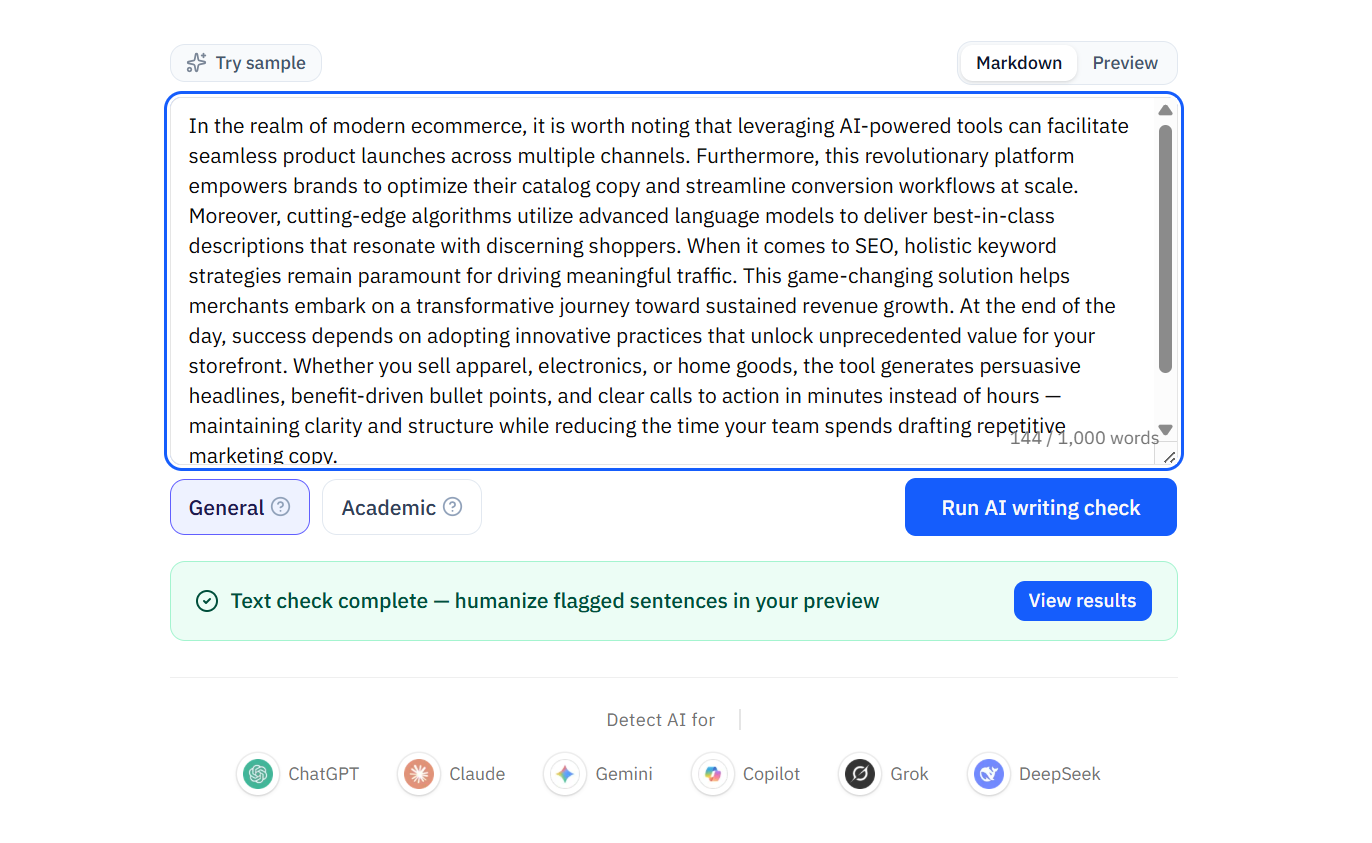
Detección de escritura IA a nivel de oración con resaltado basado en patrones
Cómo están cambiando los códigos de honor
Los códigos de honor universitarios escritos antes de 2022 rara vez mencionan la IA. Hoy, casi todas las instituciones han actualizado su política de integridad académica para abordar la IA generativa — pero los enfoques varían mucho. El MLA-CCCC Joint Task Force on Writing and AI ofrece un marco ampliamente citado sobre cómo las instituciones deberían pensar la IA y la integridad en la escritura. Algunas escuelas adoptan políticas permisivas (uso de IA permitido con declaración), otras restrictivas (IA prohibida por completo), y muchas ocupan un gris intermedio (IA permitida en algunas tareas pero no en otras, a discreción del instructor).
El hilo común en todos los enfoques: la declaración importa. Ya sea que tu escuela permita o prohíba la IA, ocultar tu uso se trata universalmente como una violación. La cuestión ética no es si usaste IA — es si fuiste honesto al respecto. Un estudiante que declara «usé ChatGPT para lluvia de ideas y Grammarly para editar» actúa éticamente incluso en una institución restrictiva. Un estudiante que genera un ensayo con IA y lo entrega como propio viola la política incluso en una permisiva.
Qué cuenta como uso ético de IA
El límite entre uso ético y no ético de IA es más claro de lo que la mayoría de los estudiantes cree. Usar IA para generar ideas que luego desarrollas tú — ético. Usar IA para generar párrafos que entregas como tuyos — no ético. Usar IA para revisar gramática — ético. Usar IA para «mejorar» tu escritura haciéndola sonar como si la hubiera escrito otra persona — no ético.
La prueba más simple: ¿estás usando la IA para apoyar tu propio pensamiento o para reemplazarlo? Lluvia de ideas, esquemas, edición y pedir feedback son apoyo. Generar, reescribir y humanizar son reemplazo. Uno construye tus habilidades; el otro las erosiona. La línea ética también es la línea del aprendizaje.
Cómo declarar el uso de IA
La mayoría de las instituciones que permiten el uso de IA exigen una declaración: un párrafo al final de tu tarea describiendo qué herramientas usaste y cómo. Las declaraciones más efectivas son específicas: «Usé ChatGPT-4 para hacer lluvia de ideas sobre mi tesis y organizar mi esquema. Escribí todos los párrafos yo. Usé Grammarly para la revisión final de gramática.»
Una declaración específica genera credibilidad. Una vaga («Se usaron herramientas de IA en la preparación de esta tarea») genera preguntas. Y la negación seguida de una puntuación alta del detector es peor que cualquiera de las dos — sugiere engaño encima del atajo original.
Qué pasa si te descubren
En la mayoría de las instituciones, una primera violación de integridad relacionada con IA resulta en una conversación, no en un castigo. El instructor pregunta sobre tu proceso. Si puedes explicar tu trabajo, demostrar tu comprensión y mostrar tus borradores, el caso suele resolverse sin escalar. Si no puedes — si entregaste trabajo que no entiendes — las consecuencias suben: nota reducida, reentrega de la tarea o proceso formal de integridad.
Los estudiantes que enfrentan las consecuencias más duras rara vez son los que usaron IA — son los que mintieron al respecto. La honestidad sobre la dependencia excesiva, combinada con la disposición a rehacer el trabajo, produce consistentemente mejores resultados que la negación.
Consejos rápidos
Conoce la política de IA de tu escuela. Cada institución maneja la IA de forma distinta. Algunas tienen políticas explícitas; otras lo dejan a discreción del instructor. Sabe qué aplica a cada una de tus clases antes de entregar.
Declara de forma específica, no vaga. «Usé ChatGPT para hacer lluvia de ideas sobre mi tesis y organizar mi esquema, luego escribí el ensayo yo» es creíble. «Se usaron herramientas de IA» es sospechoso. La especificidad genera confianza.
Documenta tu proceso. Borradores, esquemas e historial de versiones demuestran un desarrollo auténtico. Si surgen preguntas, tu proceso es tu defensa.
Si tienes dudas, pregunta a tu instructor. La mayoría de los instructores aprecian preguntas proactivas sobre el uso de IA. «¿Está bien si uso ChatGPT para lluvia de ideas?» es una conversación que dan la bienvenida. Sorprenderlos con uso de IA no declarado, no.
Preguntas frecuentes
Dudas comunes sobre ética de la IA en la escritura académica.
¿Usar IA para la tarea es hacer trampa?
Depende de la política de tu institución y de las pautas de tu instructor. Usar IA para generar trabajo que entregas como propio se considera una violación en la mayoría de las escuelas. Usar IA para lluvia de ideas, feedback de edición o revisión gramatical es cada vez más aceptado — especialmente cuando se declara. La distinción clave: apoyar tu pensamiento vs. reemplazarlo.
¿Cómo declaro correctamente el uso de IA?
Agrega una breve declaración al final de tu tarea: qué herramientas usaste, para qué propósito y cómo. Sé específico: «Usé ChatGPT para hacer lluvia de ideas sobre mi tesis, Claude para organizar mi esquema y Grammarly para gramática. Todos los párrafos los escribí yo.» Ese nivel de especificidad genera credibilidad con los instructores.
¿Qué pasa si me descubren usando IA sin declararlo?
En la mayoría de las instituciones, una primera ofensa resulta en una conversación con tu instructor, no en una sanción automática. Los estudiantes que pueden explicar su trabajo y demostrar su comprensión suelen resolver el asunto sin escalar. Los que no pueden explicar lo que entregaron enfrentan consecuencias que van desde bajar la nota hasta procesos formales.
¿Mi escuela puede detectar el uso de IA aunque yo lo declare?
Sí — declarar no evita la detección; la contextualiza. Si declaraste uso de IA y un detector marca tu trabajo, el instructor ya tiene tu explicación. La declaración transforma «encontré patrones de IA en tu trabajo» de una acusación en una confirmación de lo que ya les dijiste.
Revisa tu trabajo y escribe con integridad
Usa las herramientas gratuitas de Naturalmelo para revisar tu escritura en busca de patrones de IA — luego revisa en tu propia voz. Sin registro.
Ejecutar análisis de escritura IA